
Starlink has become the cornerstone of the war in Ukraine
28 September 2026
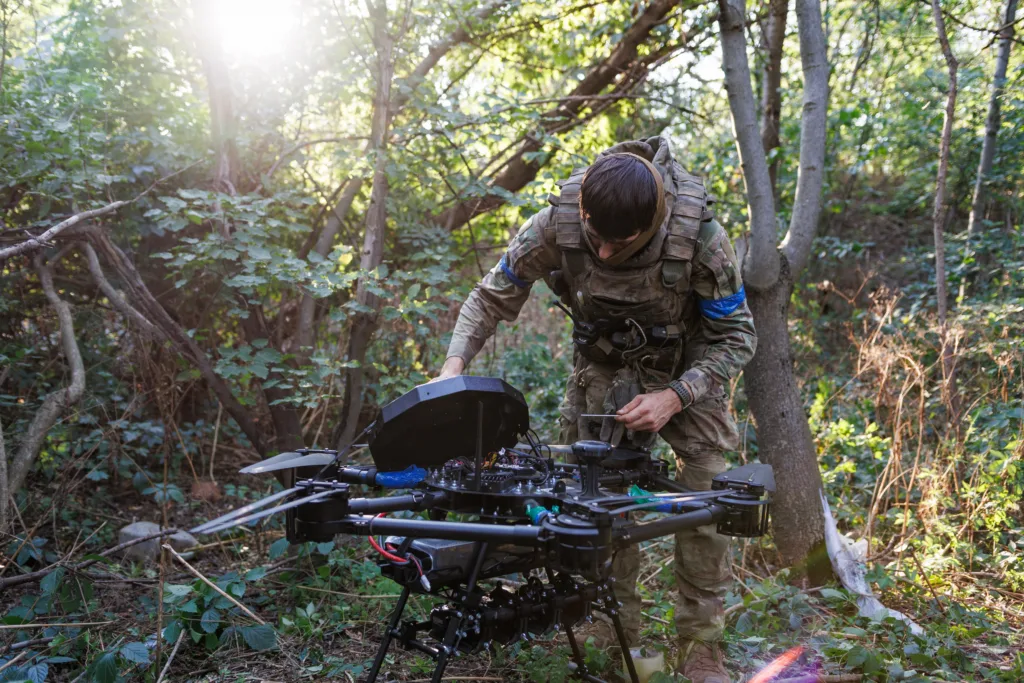
Running through treelines and jumping into a truck just 2 kilometres from the zero line, we move from positions with the Lubart Brigade of the Azov Brigade towards a Vampire drone position. Upon entering the bunker, the Vampire pilot is intensely focused on the screen, attempting to save a $10,000 drone as its signal is jammed mid-flight. Their backup drone is incapable of flight, making this their only operational tool. For twenty minutes, they try to save it, but ultimately, they fail.
The vampire drones, what the russians call “Baba Yagas”, usually fly at night; however, daytime drones started to be experimented with in the summer of 2025. Because it was during the day, a friendly Ukrainian jammer had started mid-flight, and the radio signal connected the position to the drone itself – this position was rendered useless until the next day when resupply came. In the war of drones, connectivity means either the success or failure of the mission. As more electronic warfare systems were set up and the “kill zone” of FPV drones grew deeper past the zero line, a new solution was found: Starlink.
Ground drones, Vampire drones, mid-range strike drones, and position internet all use Elon Musk’s system of satellite remote internet; it has become a key component of Ukraine’s defence efforts, and I have seen it evolve since it was first attached to the Vampires.
The prototype phase
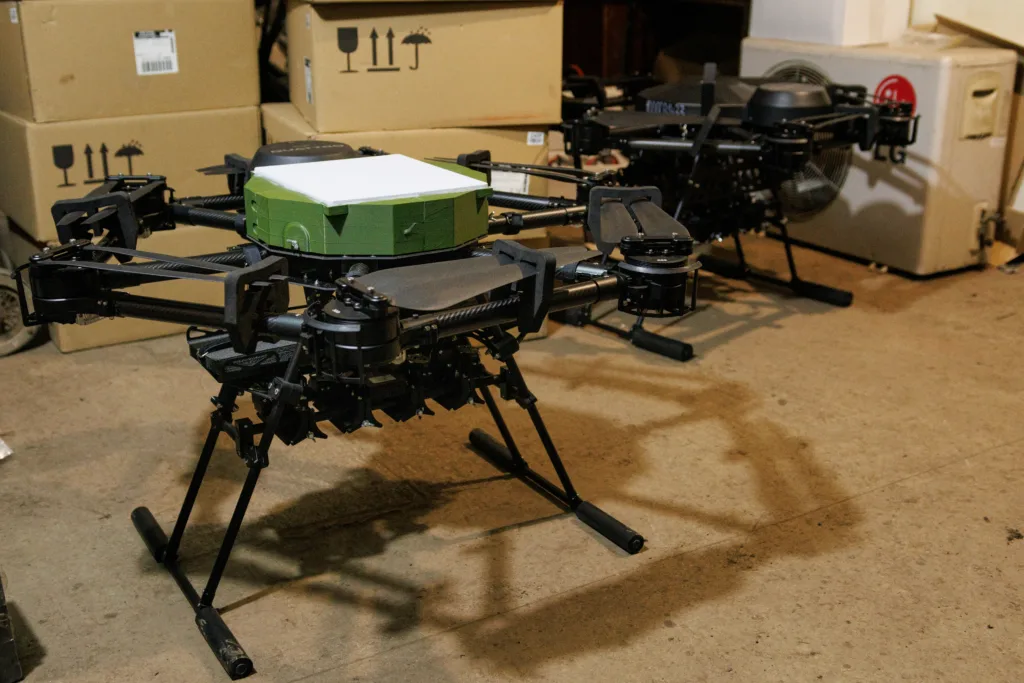
Walking into a Khyzhak Brigade workshop in early 2026, I see dozens of Starlink boxes line the wall, while a buzz saw cuts into a Starlink board, and wires are soldered on. with dozens of Starlink boxes on the wall and a buzz saw cutting into a Starlink board, with wires being soldered on. The top cap of the drone has been replaced with a 3D-printed housing for the Starlink. This was the first time I had seen this technology. This had been under wraps to the point I was told that even the russians had not figured out this technology.
“Archie,” a police officer with the Khyzhak Brigade, tells me that the combination of Starlink and a Quatro system allows the uninterrupted signal between the position and the pilot, unable to be affected by electronic warfare or intercepted, to complete more missions. He tells me, “It’s a helluva combination.” Archie was one of the first generation of vampire drone flights, operating one of the only five vampires in the Donbas during the initial stages of the full-scale invasion. He moved to being an engineer after being wounded in frontline service, but his love for these drones is still palpable, telling me that it was love at first sight. Now he gets to define the next stage of vampire drones firsthand. “I understand how the vampire works, how it flies, and what makes it easier for the boys to operate […] Now I do everything I can to help it perform in combat.”
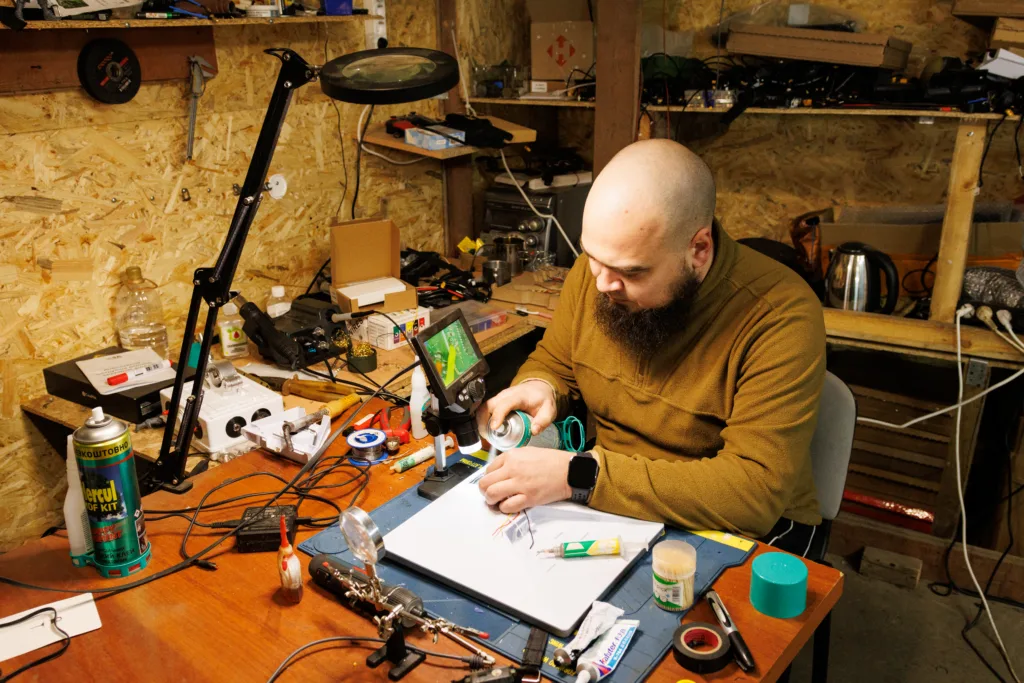
Workshops like this not only adapt starlinks but also rebuild broken drones, sometimes from multiple broken drones, and even create what they call “Mutants.” While a standard vampire uses two batteries and a radio signal, the mutant uses Starlink and is equipped with a quad-battery system; the configuration allows for up to 25 kilometers of deep range.
Being free of jamming allows these drones to fly through both Ukrainian and russian electronic warfare systems. This also reduces the number of personnel required in frontline positions; highly trained pilots can connect remotely and remain effective even if a drone they are operating is taken down by a russian FPV interceptor or if there is a strike on the drone team’s location, similar to the injuries sustained by Khytryi and Archie. Both police officers, Khytryi and Archie, work here.
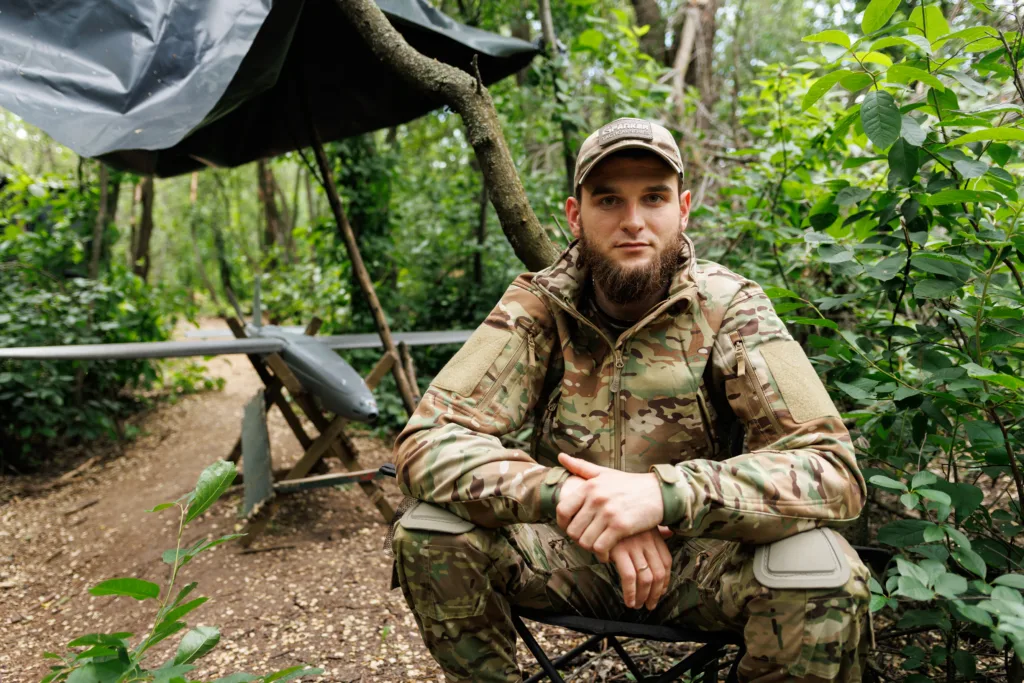
In 2026 footage from the Azov Corps would be published showing mid-range strike drones flying over the cities of Donetsk and Mariupol—this was possible due to Starlink and its usage in extending range. I spoke with a mid-range strike drone team from the “Ghosts of Khortysa” battalion of the 15th National Guard Brigade “Kara-Dah,” who are still using radio-controlled mid-range strike drones to target trucks, logistics, and occasionally artillery.
Starlink technology is not uniformly implemented, leaving brigades like Kara-Dah in a challenging position. I am told that “wealthy” units such as the Azov and Lubart brigades can afford Starlink units, but this unit needs to fundraise for buying themselves Starlink-mini systems. “If we had this system sooner, it would’ve been much better because it can strike deep behind enemy lines to disrupt their movements and logistics quite effectively.” These Hornet drones without a Starlink are still susceptible to jamming, as we would see later on as they fly past Pokrovsk and lose connection. A mini-Starlink might seem like a cheap and easy solution, costing roughly $200 USD, but at the frequency and nature of these mid-range strike drones, this cost can easily compound.
Full implementation

In the middle of 2026, “I would embed with the 1st Unmanned Systems Battalion “SoKill” of the 117th Territorial Defense Brigade as they calibrated and tested Vampire drones, attaching water bottles instead of bombs to the drop system, and checking the connectivity of the Starlink system that now sits on a factory-made top dome with a Starlink holder.
The process is interrupted when a call comes through about a russian assault near Mykolaivka. The crew moves quickly to pack up their gear, collecting their computer system, and folding the wings of the drone down into place. Packing everything into their vehicles, they race down drone netting-covered roads back to their piloting station. In a room adorned with Ukrainian flags, the flag of Sokill hangs next to a large flat-screen TV showing the conditions of the front. Maks “Volunteer,” a pilot for this position, picks up the controller and logs in to see what drone is available in the R2D2 system.
The bottleneck for Vampire work came from having to juggle mission types—bombing, logistics, minelaying, and propaganda leaflets all from one team and one drone. The R2D2 system allows for remote pilots to connect directly to a drone’s Starlink unit across the battalion. This allows for pilots to be able to switch between drones from specialized teams focused on one or two different jobs. The orders came in, and a remote vampire position closer to the front had loaded their payload–four drop bombs. As Volunteer successfully connects, the Imperial march theme plays.

Flying past the derelict Thermal Power Plant in Mykolaivka, we can witness the results of KAB guide bomb strikes against it. The assault was further into the forest, where the night prior this unit had dropped propaganda leaflets urging and instructing russian forces to surrender. The men of this unit joke that they must not have seen the leaflets.
Spotting the russian forward positions, Volunteer manoeuvres the Vampire drone directly overhead and drops the first bomb, achieving a successful hit. He then adjusts for the second volley and releases the next, which also strikes directly. The second position is heavily covered by trees; however, Volunteer has worked closely with these drones and is able to drop both remaining bombs accurately, destroying the position. With all bombs fired off, Volunteer starts to pull the drone back up and away from the area of operations; due to the low latency of the Starlink unit, he is able to quickly shift the drone to dodge an incoming FPV interceptor that flies past and leaves the Vampire still flying.
As the Vampire drone lands back at its home base, we get the radio call that the assault had been successfully repealed. Volunteer stated that while the Starlink technology is great, they would be downgrading their Starlink subscription level next month, explaining that the increased usage of Starlink has slowed down speeds at the highest subscription tier due to exponentially higher demand on the bandwidths; now, the lower tier can sometimes provide more consistent performance than the higher tier.
While the pilots may experience some degree of safety, the danger remains for ground teams, particularly those positioned closer to the front lines who manage and arm vampire drones or deploy ground drone teams as I join the Tavr Assault Battalion.
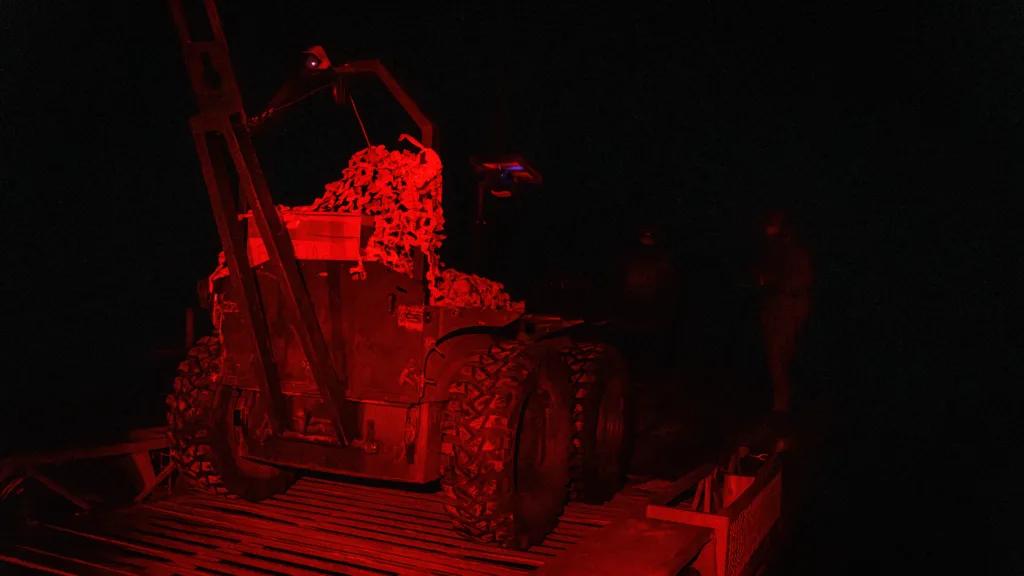
We arrive with a convoy to deliver a UGV to the gates of Kostiantynivka; the police officers of Tavr exit their armored transport vehicle and take up positions, listening intently for the sound of FPV drone blades slicing through the air. This resupply ground drone, equipped with Starlink, carries a mountain load of supplies destined for otherwise unreachable positions. Connection issues between the pilot and the drone cause it to roll back and forth on the trailer. We are sitting out in the open waiting for these satellites to properly establish a connection. The officers wave at the camera until the connection finally establishes, and just as someone shouts, “FPV,” the drone pulls away.
Are there alternatives?
As more war infrastructure relies on Starlinks, genuine concerns arise about Ukrainian forces fully controlling this technology. The temperament of Elon Musk, along with his history of shutting off Starlink, like in September 2022 when Ukrainian forces attempted to use it to strike military assets on the Crimean peninsula.
Ukrainian forces have requested to use Starlink-enabled drones to strike russian military bases and missile silos in russia. Elon Musk had made the final decision to not allow for attacks inside the territory of the russian Federation. In a report published by the Kyiv Independent, sources would say that Musk does not believe allowing Ukraine to use Starlink for operations inside russia would help bring the war to an end. Quote: “Musk wants a deal in this war, not escalation.”
This raises the question: Are there any alternatives?

In short? No, or at least one that would not require significant investment. Both France and russia have developed alternative systems to differing levels of success. The French alternative Eutelsat, despite its design for governance and military use, can’t provide the same reliable bandwidth that the now-dependent frontline requires.
A mesh network of interconnected nodes forming an independent radio signal allowing for long-range operations is often championed by people such as Ryan O’Leary, former Commander of Chosen Company, and is theorized to have been the system used against the Headquarters of Ukraine’s SBU that happened on September 4th. Serhii Beskrestnov, an adviser to Ukraine’s president on technology, would say that “In my personal opinion, the Shahed was controlled and guided online through a MESH radio relay with internet access that a russian agent activated somewhere nearby, within 5 kilometers, for a short period during the attack.” Mesh systems are already used in drones.
Keeping relays and nod points for a mesh system can be difficult to maintain and intensive to set up across an ever-changing front with many points of failure. In short, despite various concerns, Starlink is currently the best system available and will increasingly be used by the armed forces of Ukraine to transform the nature of warfare.
